The Bustle: Alterations You Have Not Even Thought About Yet
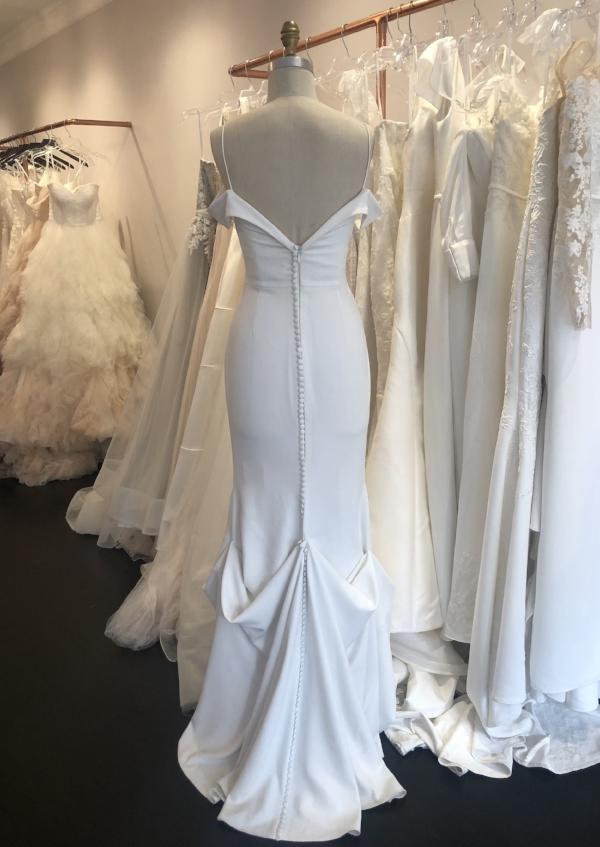
You’ve found your dream wedding dress, so now it’s time to get down to business into the next step of the dress process: alterations.
Altering the bridal gown is needed to perfect the fit of the dress based on what size dress the bridal store ordered from the brand. You will need to find a qualified seamstress specializing in performing bridal alterations to your wedding dress. Alterations can look like anything from hemming, taking the dress material in our out, adding buttons, straps, lace, or hooks and eyes to fasten the dress closed. These alterations are added in order to help the look of the dress and help you walk easier in the dress.
According to Brides.com, a bustle refers to “the process of transitioning a wedding gown to function as if it has no train.” Bustles are essential for gowns with long trains that you want to put up so it will not be stepped on or dragged all over the floor during the reception. Dresses do not automatically come with a bustle from the brand ordered from. It’s up to the bride to decide whether she wants one or not and to find a qualified seamstress to make it based on the bride’s height and desired look. You typically will not need a bustle on a wedding gown that is short or tea-length. There are several bustle types to choose from, so it’s important to acquaint yourself with the looks of each type of bustle you are looking for your dress to have before starting the alterations process with your seamstress.
Before we get into each type, keep in mind that you will need to assistance by other person to bustle the dress train. It is very difficult to bustle the dress yourself while wearing it. For the person tasked with bustling the dress, make sure they come to an alterations fitting so the seamstress can teach them the mechanics of how to execute the bustle properly.
American Bustle
This bustle style has several hooks placed throughout the back waistline and eye loops on the train that allows the train loops to be hooked onto the waistline overtop of the dress itself. There can be several bustle pick-up points, some range from three to five points for a more dramatic look. This style is best for mermaid, ball gown, or a-line bridal gowns with long trains.
Note: do NOT have your seamstress put the bustle loops in solid portion of tulle on the dress train, as it will rip from the pressure of the heavy train hanging on the hook if it does not have lace or a placeholder to help the tulle from ripping. A good seamstress will cover the hooks and eyes using rosettes, lace appliques, bows, or even buttons so they are not visible to the eye from afar.

Austrian Bustle
This style draws inspiration from Austrian theatre curtains. The dress layers from the waistline to mid-leg are ruched together by gathering onto an internal cord. The results: having cascading fabric that flaunts the back of the dress while leaving the hemline near the ground. This bustle style is suitable for a gown with a simple skirt decorated with intricate lace, beading, or appliques.
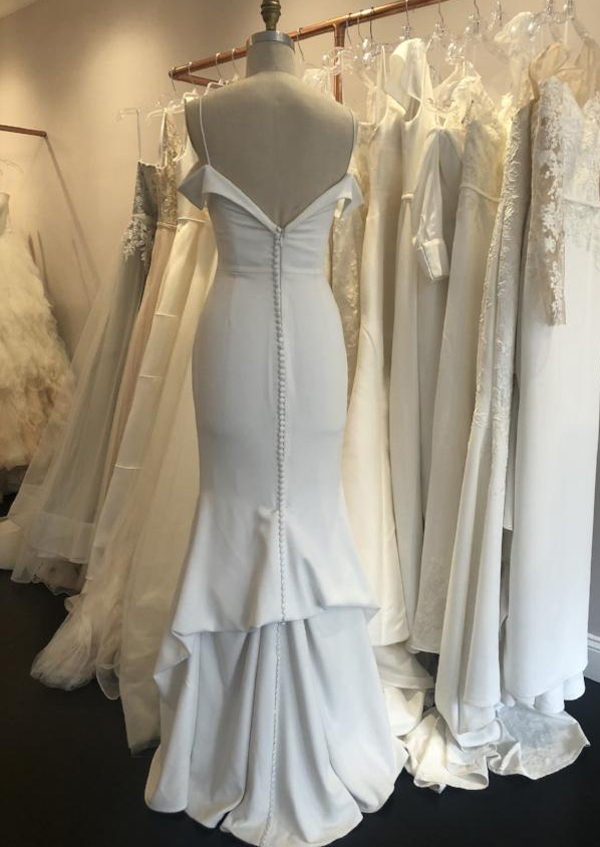
French/Victorian Bustle
This bustle style extenuates the detailing of the gown below the waistline by not covering up the waistline. This is the reverse of the American bustle, as hooks pick up the train of the gown as it is tucked under the dress silhouette itself. Under the layers of the dress, ribbons are sewn in to connect and secure the fabric so it can have multiple pick-up points for an extra flair. This style is more secure, as the hooks and ribbons are hidden underneath the dress using color coordinating ribbons that match up with a hook to create a bouffant fold when it’s time to be bustled.

Bow Bustle
The bow bustle is perfect for dresses with statement bows or a sash. The dress fabric is folded above the gown and secured with ties or hooks underneath the bow. This allows the train fabric to be lifted off the ground but still have a flowing look down the shirt in a ruched fashion. This style if best for full skirts with tulle fabric.
I hope this helps in explaining the different types of bustle styles offered for wedding gowns. Do your research for what type of look you want your gown to have when it is bustled and make sure your seamstress has trained experience working with this bustle for the best possible look and outcome.