White vs. Ivory – The Difference Between These Bridal Colors

Deciding which color is best for you

Wedding dress shopping comes with it’s fair share of opinions and decisions. When it comes to deciding on a dress, it’s customary to ask what colors the dress comes in, as designers offer specific dresses to come in different colors.
Today, there are a lot of off colored wedding dresses on the market that are not the traditional pure white. Brides want be different than a ‘traditional bride’ by wearing nude, ivory, pink, baby blue, or even black.
Below are some of the shades of colors that wedding dresses come in and tips for how to decide which color is best for you.

Stark White
The brightest white possible. Stark white is bleached to get the crisp look and is best achieved by using synthetic fibers like (satin, taffeta, or polyester blends). Synthetic fibers are not made naturally, they are humanmade. The bright white hue tends to reflect and pick up other colors surrounding the fabric, but over time, it has become less popular with brides since it is too bright. Ruthie Bright, a bridal boutique owner, cautions, “We advises brides to be careful choosing stark white because with HD cameras, the gowns can photograph with a light blue tint.” This is a good note to consider when dress shopping.
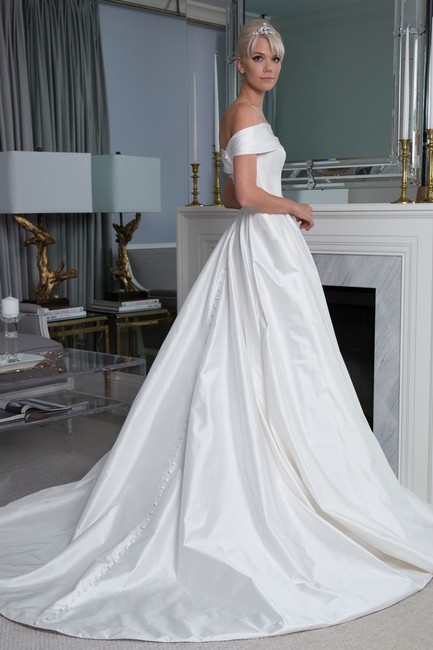
Natural White
This is the whitest shade that natural fibers can achieve, also known as “diamond white” or “silk white”. This shade falls between stark and ivory (discussed next) as it features a little less warmth than ivory, but not as bright as stark white. Some women fear since it’s not the brightest level of white that they won’t look like a bride. However, natural white photographs much better than stark white as it’s more flattering to a wide range of skin tones.
Ivory
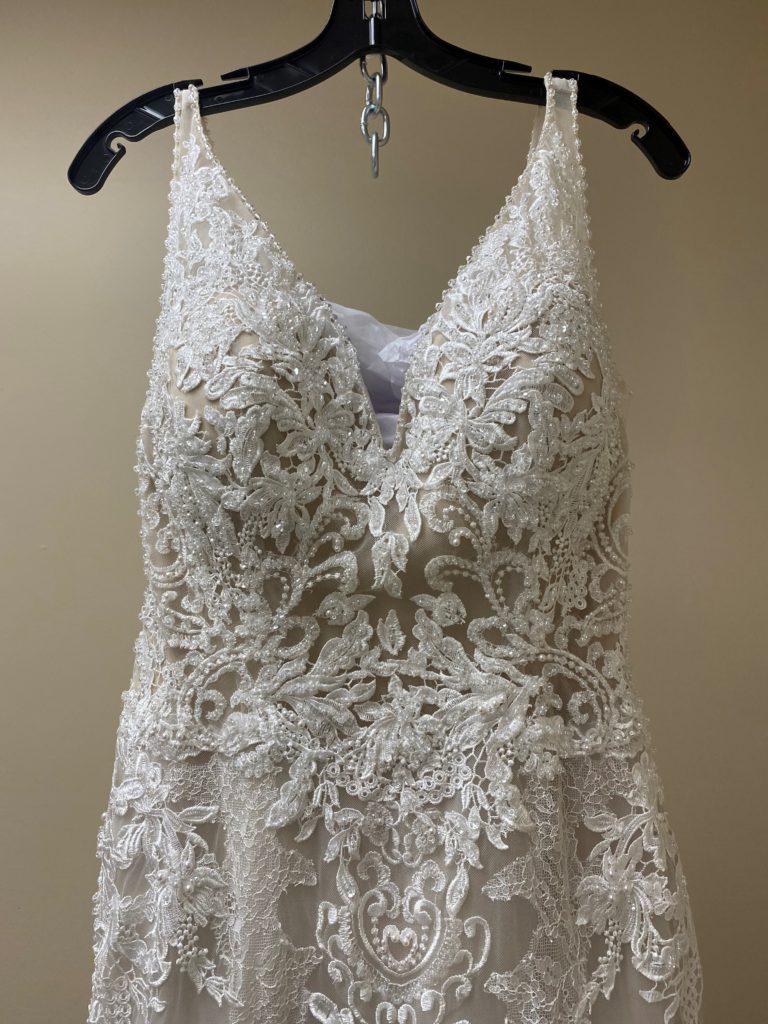
This creamy color has turned into a popular shade that lots of dresses are available to order in. Luckily, ivory still photographs as white, but naturally have yellow undertones unlike a soft white look of natural or stark white. In fact, most brides think that ivory is natural white on the rack until otherwise told by the bridal salon. Don’t be fooled by the name of the color shade dresses come in, because under lights can make the dress appear a different color than on the tag.
The rule of thumb: brighter whites look best on darker skin tones or complexions that have a yellow or olive undertone. White dresses make brides with fair skin appear to be harsh and washed out. If you have fair or pink skin undertones, then yellow-ivories will compliment brides’ complexion the best. When in doubt, go with ivory. Make sure to try on gowns in natural light to find out which shade looks best on you for your big day.