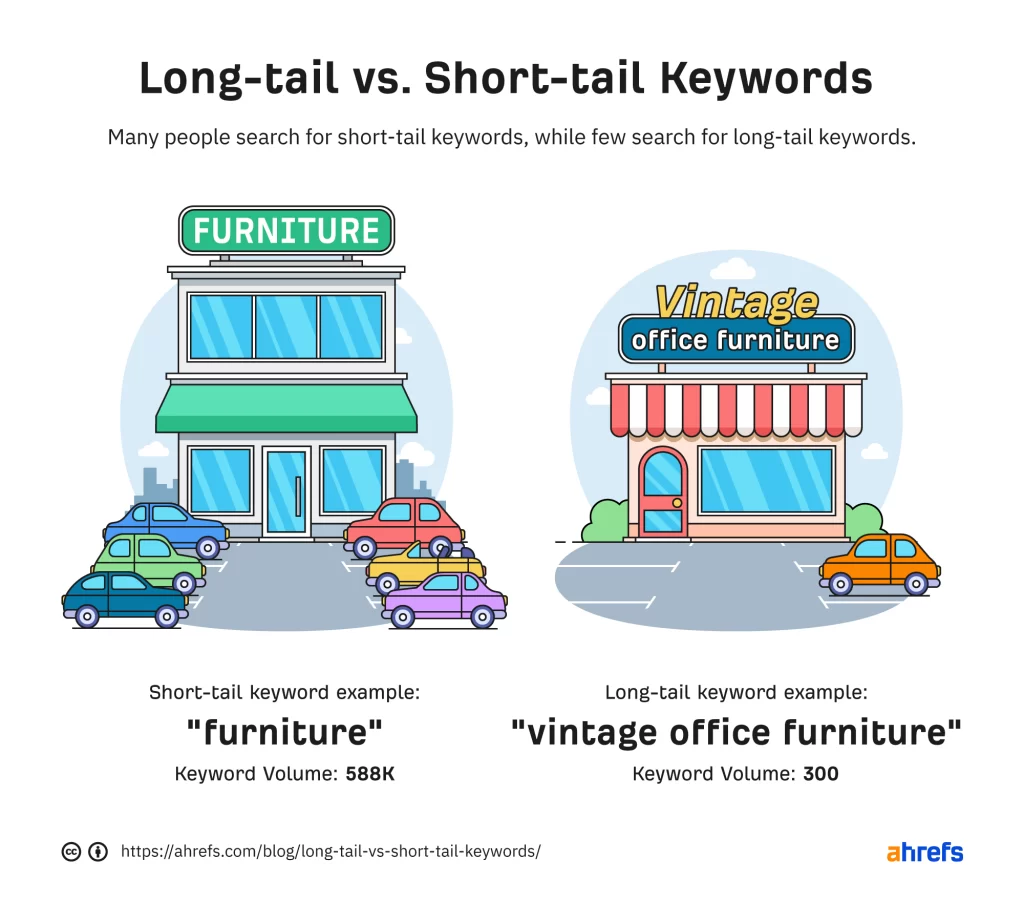
The key difference between long-tail and short-tail keywords lies in their popularity. When searching online, people often use short-tail keywords like “Amazon” or “Walmart” for broad, high-traffic queries. In contrast, long-tail keywords, such as “where can I get my Toyota CHR fixed,” are used for more specific searches. Short-tail keywords generate high search volumes, making them ideal for websites that thrive on broad engagement and scrolling. On the other hand, while long-tail keywords attract less traffic, they tend to bring in highly interested users who are closer to making a decision.
Why Target Short-Tail Keywords
- Higher Search Volume – Most people are not searching long search terms unless they are looking for very specific items. Most people enjoy browsing the internet looking for different things that are available out there.
- Brand Visibility – If your company is capable of ranking for short-tail keywords, it signifies strong brand recognition and credibility. This means that when people search for services or products your company excels at, they see your business as a trusted and leading choice in the industry.
- Potential for more clicks – If you company ranks for short-tail keywords then more people are seeing your company in the SERP which means more people are going to click into your website. This means more people are likely to purchase from you.
- Broad Search Term – If your company has a lot to offer like Amazon or Walmart short-tail keywords are great for those companies that have a large variety in products
Why Target Long-Tail Keywords
- Low Competition – People are not often searching with long search term. So if you can rank for terms that are very specific when you do get those searches people are going to click right into your website
- Higher Conversion rates – People that search with long-tail keywords are often already considering the conversion. So when you rank for long search terms, the people that search those words up are likely ready to purchase soon. They are not there to look around they are there to make a purchase.
- Topical Authority – When you target a certain niche to rank for google recognized that you have authority in that field so you rank higher in the SERP.
Find more information on this website – https://ahrefs.com/blog/long-tail-vs-short-tail-keywords/
4 Responses
Great comments about why long tail keywords are still valuable to try and rank for. I think there is a negative perception towards them because of the low search volume, but in reality, that’s one of the strengths of long tail keywords.
I think you did a great job explaining the differences between these two options and the strengths of each. It begs the question as a seller which direction should be taken, the more broad and higher traffic, or the more niche and higher conversions. I would be curious is there is a way to realistically target both without losing the advantages of one or the other option.
I like how you have two different examples of Furnitures where they have short and long tail.
This is awesome! You articulated the strengths to both very effectively. Its an interesting thought to think if one form is better than the other but as you mentioned, you really have to understand your business and the behavioral intent of your searchers to know which style of keywords is going to work best.