Nostalgia marketing is becoming an increasingly effective way for brands to market to consumers. You see this with the restoration of old packaging, retro logos, and the increasing popularity in thrifting. Many consumers have deep emotional attachments to businesses that once existed but you can only find in a select few towns, or not at all (hello, Blockbuster and now, Party City). Examples of nostalgic experiences include everything from shoe repair shops to drive-in movie theaters and cute, retro diners. Businesses can fulfill unmet needs (and therefore increase SEO) by identifying these gaps in the market through brand monitoring, direct consumer feedback, and looking back into the past.
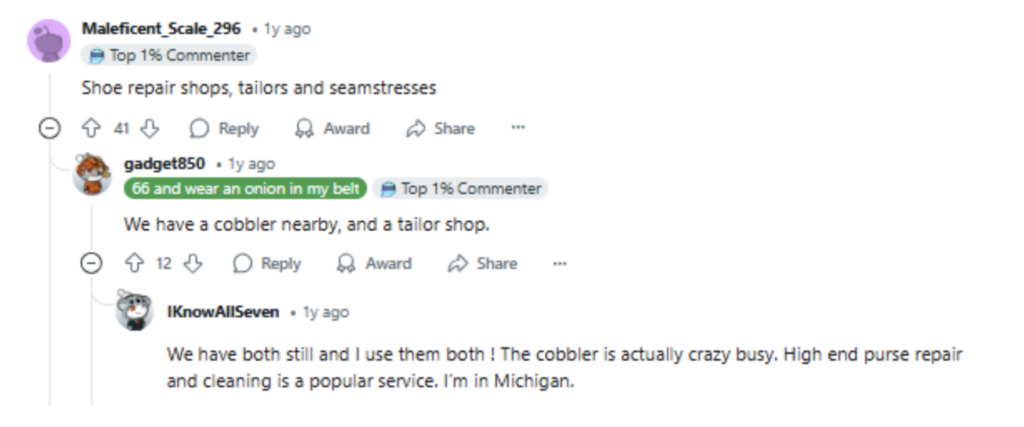
When these nostalgic desires are successfully addressed, businesses can generate authentic word-of-mouth marketing. When towns don’t have these services, it gives other businesses a chance to boast about their own, which with the help of a few strategically placed links, can help businesses direct even more traffic to their sites and storefronts. Check out this forum on our new SEO best friend Reddit:
Here is another example of a random consumer talking about their local nostalgic business:
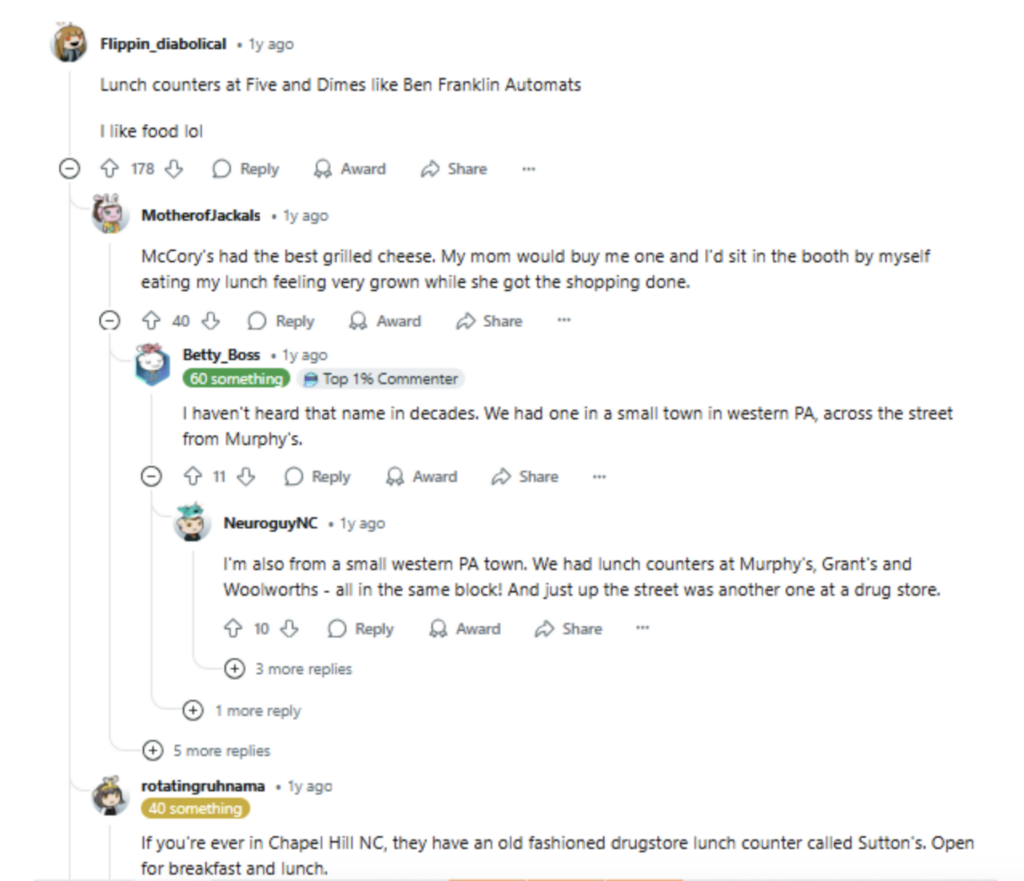
It is also worthy to note that local consumers trust the recommendations of friends and family almost twice as much more than regular reviews online. Of course, “online” friends aren’t the same as real-life friends, but it is important to keep track of alongside the rise of Reddit’s visibility in Google’s SERPS. Word-of-mouth marketing and unpaid PR are probably the biggest goals of any business, and this article talks about the best ways to discover local needs in your community.
Monitor your brand mentions.
To tap into local nostalgia, monitor mentions of your brand using tools like SEMrush’s Brand Monitoring. Look for signs that consumers miss old products or services, and consider bringing something back if there’s demand.
Poll your customers.
Use surveys on an email list or social media to discover which products or services your community wants. Based on that feedback, considering (re)introducing those to fill those gaps. You could even collaborate with other business to host community events, like drive-in movie night, to engage the area and build loyalty.
Look at past data.
Local newspapers often contain archives and old articles that highlight businesses and services once loved by the community. By reviewing these resources, you can find popular, now-gone services that people miss. While some business models may not necessarily be viable, others may have potential for revival.
With any of these tools, local businesses (or new businesses trying to get established) can embrace nostalgia and almost “grandfather in” relationships with old consumers to help achieve growth with new consumers.
4 Responses
I love how you tied the idea of nostalgia in the SEO process. It makes a lot of sense to do while being efficient. at the same time.
Being able to harness nostalgia is a really good tool for marketing in general. Especially with the internet now, it is very easy to tap into people’s nostalgia and persuade them subliminally with things and themes of their childhood.
As I was reading your blog post, I got a YouTube advertisement for Kellogg’s cereal showing kids watching cartoons and eating Kellogg’s cereal “filmed” with an old school camera. Then it ended by stating “Kellogg’s tastes like Saturday morning”. Saturday morning cartoons and cereal is ritual that many look back on nostalgically which Kellogg’s is clearly trying to appeal to in the advertisement. Seeing the ad really emphasized your post and how nostalgia is being used in marketing, which was neat.
Tapping into nostalgia shows that a business is listening to their customers and focusing on their true target. Trends come and go, but nothing can beat someone thinking back to their past selves and how they felt in that moment. Some brands you purely remember from growing up and have memories attached to them, I like how you gave examples of real people saying real memories