As we have continued to use Semrush throughout this semester and have begun the Semrush Academy Modules, I have been amazed at the power of their site, and all the tools and capabilities that are available. It genuinely feels as though every single aspect of digital marketing can be tracked, improved, and managed through their platform. Their mission statement states that they exist to “make online marketing easy and accessible for all,” something that they have certainly accomplished. Keep reading to learn more about their Semrush’s history, as well as some of their current stats.

History
Semrush was founded in 2008 as a single tool originally intended for private use only. However, a year later, they launched the pilot product, at that time only having 3 employees. By 2012, the platform had 4 different tools and was growing based solely on word of mouth, which is pretty ironic for a company that focuses on digital marketing. Two years later, the number of tools had doubled, with Semrush now offering 8 different options to help marketers.
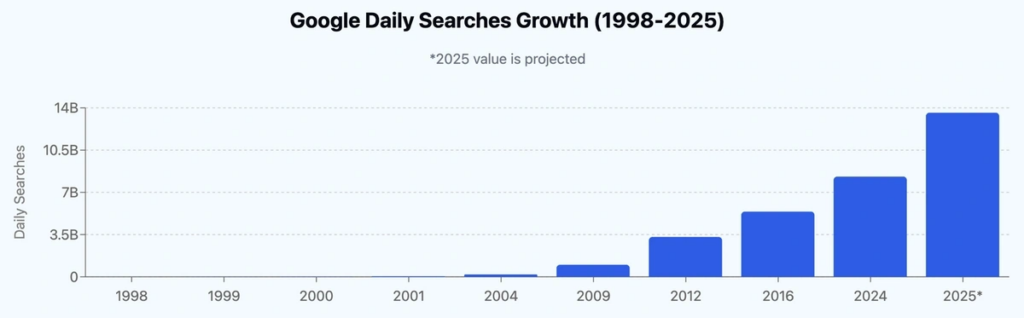
Semrush then went global in 2015, opening offices in Prague (Czech Republic), and Limassol (Cyprus). I was very surprised that these were the two cities that Semrush chose to start their global expansion, but clearly their strategy paid off. By 2016, Semrush offerred 21 different tools on their platform. This was a massive increase at a very pivotal point in the SEO world, with the volume of Google searches increasing dramatically around that year, as seen in the chart below.
The following year, in 2017, Semrush added 6 more tools to their portfolio, as well as kicking off Semrush Academy to fill the gap of educational resources on how to maximize digital marketing. Things really began to pick up during 2020, when Semrush acquired Prowly, a PR and Media services software that specializes in media relations. During the lockdown, Semrush was also able to add a whopping 28 tools to their offerings, now boasting over 55 different options.
Since then, Semrush has continued to expand. They created their Semrush App Center that allows app integration with third parties in 2021, and then they opened six new offices in 2022 (5 of which are based out of Europe). In the past three ears, they have also continued to acquire other SEO, marketing, sales, and media companies.
Current Figures
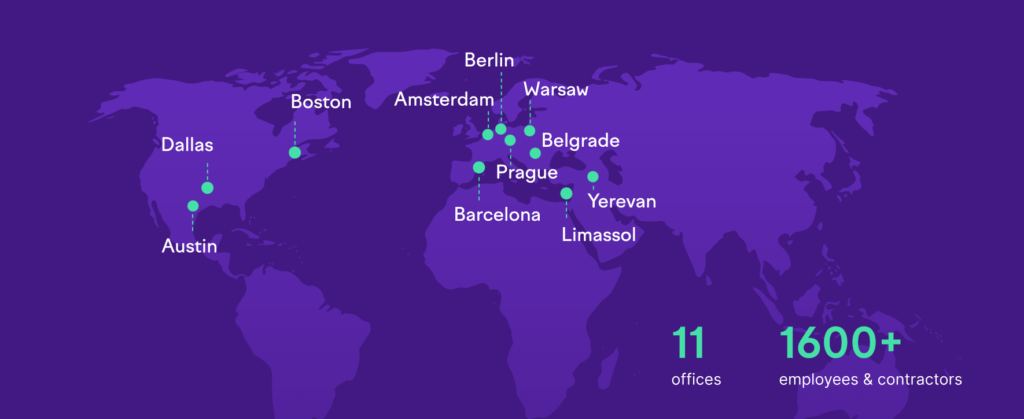
In 2023, Semrush reached some important milestones; celebrating 100,000 paying customers, and 1,000,000 active users with a free account. According to their site, Semrush now has 11 different offices around the world which overall serve 156 countries (that’s 80% of the world!). Even more impressive than that is the over 10 Million users that have tried Semrush in just the past 16 years. That’s the equivalent of about 1,712 new people signing up for a Semrush account every day.
Beyond the accounts, Semrush’s robust platform boasts impressive amounts of data that they use to serve their customers. In total, they have over 500TB of raw data, and analyze 1B events each day. Beyond that, Semrush has:
- 26.5 B keywords in their Keyword Magic tool
- 808 M domain profiles created
- 43 T backlinks crawled
- 10 B URLS crawled every day
- 60+ apps in their App Center
Now as you continue to use the Semrush tools throughout the semester, you will have a better understanding of how Semrush got to be the powerful platform that it is today.
All of this data is taken from both Semrush’s About Page and their Stats and Facts Page.
One Response
I think this is a super interesting topic. I’ve never thought about the history of SEMrush, I have only thought of it as a toll and not put too much thought into their background. I never realized the size of the company and how international it is. Also, I think it is really cool that it is a fairly new company founded in 2008, I feel like for the size of it. The growth is pretty exponential. I think it also plays into how big and important SEO has gotten. Overall, great post!