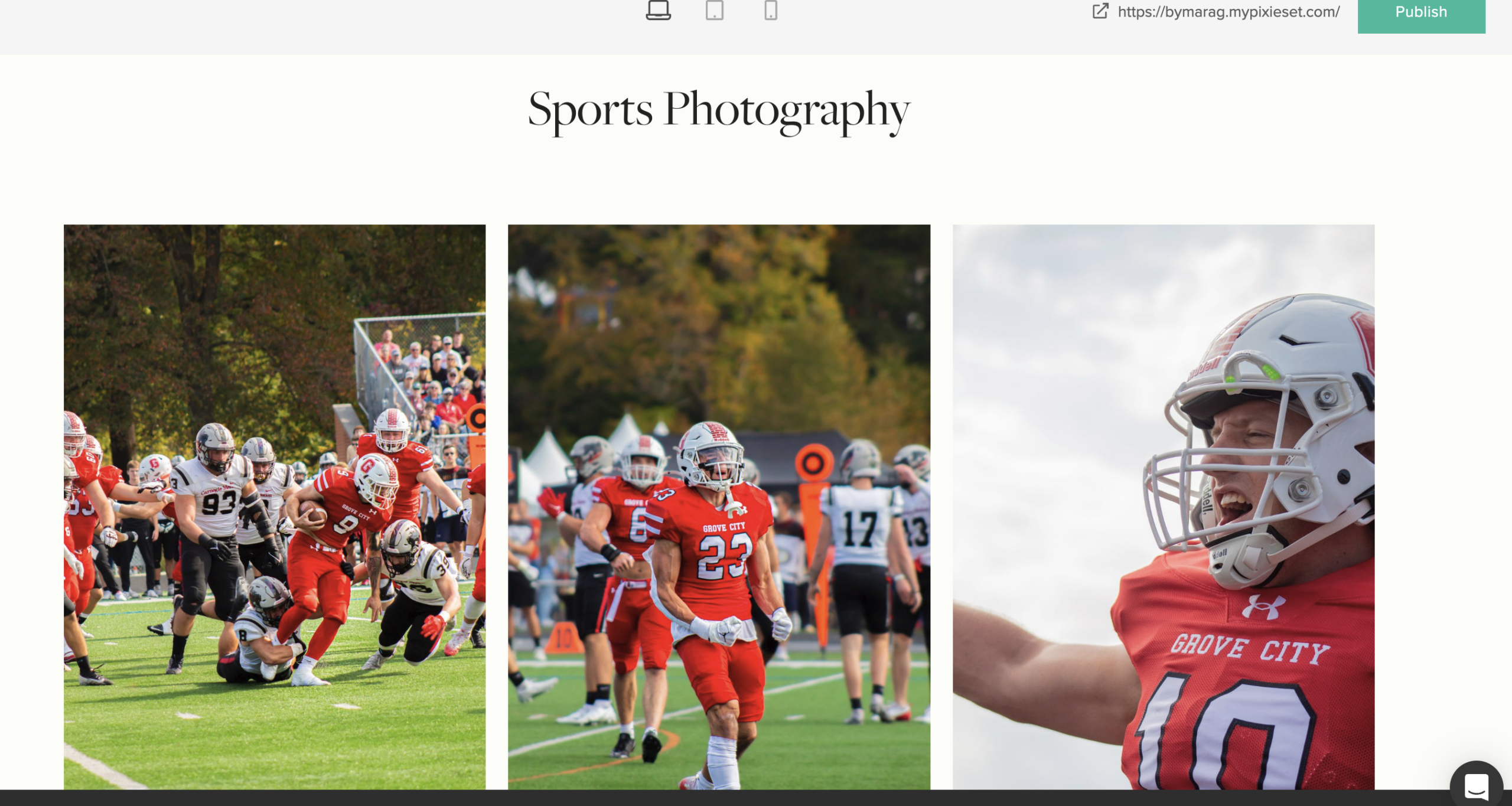
photo of original photography website
For Context
For most of my life, I have pursued various artistic endeavors. I have focused on sharing my drawings, paintings, photography, and videos through various Instagram accounts. In the past, I have created two websites in order to start monetizing my work. However, there are many tips that I wish I knew before starting my first photography website in high school.
This website is first and foremost a business website, but it is also a portfolio of all the sports photography I’ve taken and a blog with many stories/things I have learned along my photography journey.
My Strategy
Here are the top 3 tips I will use as I create this comprehensive photography business website.
- Clean Layouts
- A lot of junior portfolios I’ve seen use a lot of animations, color, and copy. This article mentions that minimal is actually better (and not just visually). If someone only has a minute to scroll through my website, I want to make it as easy as possible. That way, I can lower my bounce rate and ensure my website runs quickly. Coincidentally, it also makes your website easier to crawl for robots. All of these are positive signals to a search engine and will help my website rank.
- Descriptive Labels
- If I just post a collection of photos without giving them names, dates, or any identifying information, it means nothing to anyone else other than me. If I capture a specific point or emotional moment in a game, I want to highlight and make it a point of interest for others who may not have the context. Again, context is what helps people and search engines notice my website. Unfortunately, I tend to be verbose in my descriptions, so the key here for me personally is to make them as concise as possible while also conveying the deeper meaning.
- Linking Outside of My Portfolio
- Awards that I have won for my photography, places my photos have been used, and stories about places I’ve worked can all lead to connecting links elsewhere. Internal and external links are extremely important when optimizing my website. There are articles from the school I could link to and people/teams I’ve worked with that can link back to my website. The more connections I build, the stronger my ranking and my presence online will be.
SEO can get technical, but I have learned that it is better to keep it simple. Starting with these three points in mind will already put my new website head and shoulders above my last one that I created years ago.
2 Responses
I really appreciate the clarity and intentionality behind your strategy—your approach shows that you’re thinking not just as an artist, but as a business owner and storyteller. Your focus on clean layouts is spot‑on. Minimal design really does create a better user experience, and the fact that it also boosts crawlability and site speed makes it such a win‑win. It’s great that you’re already thinking about how even small layout choices can influence bounce rate and overall SEO performance.
Wish you had added a link to your portfolio!! I would love to check it out! From what you talked about in this blog, it seems like you have such a solid understanding of what your website visitors want. You prioritize an easy and pleasant user experience by using clean, polished layouts. Still, you’re conscious of search engines and making yourself noticed on the web. I think you have the perfect blend of having a people-first mindset and an SEO-focused approach. Great stuff!!