
In my web design class, the advice sounds the same, have clean layouts, neutral colors, familiar fonts, and minimal distractions. The things people call “visual trust signals,” meaning they help users feel comfortable and confident on a website. However, there are many well-known websites that break these rules entirely and still manage to attract loyal users. This raises an interesting question, can intentionally weird or unusual website design build trust for the right audience, and could that indirectly affect SEO?
Visual trust signals are usually signs of professionalism and clarity. A clean design can make a website feel legitimate, which encourages users to stay longer and explore more content. Search engines pay attention to these user behaviors. However, trustable is not the same for everyone. For some audiences, especially creative people, artists, and younger users, unconventional design (or even ugly design) can feel more authentic than a shiny polished template.
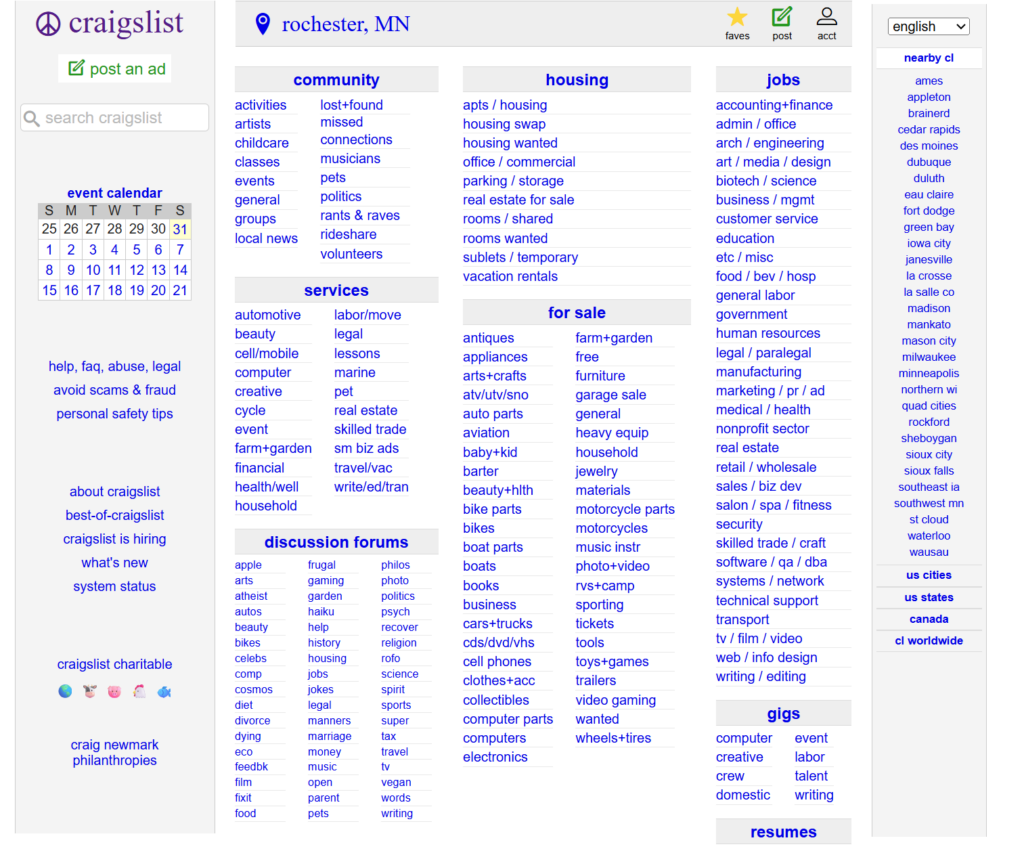
Websites like Craigslist are a good example. Despite its outdated appearance, many users trust it because it is familiar, predictable, and clearly serves its purpose. Similarly, experimental artist portfolios, indie brand sites, and brutalist-style websites often use strange layouts, bold visuals, or intentionally chaotic design. For their audiences, this “weirdness” signals creativity, honesty, and independence from corporate design norms.
From an SEO perspective, search engines are not ranking these sites because they look unusual. Instead they respond to how users behave. If visitors stay on a site longer and explore, or return later because the site is memorable then those engagement signals positively affect search performance. In this way, unconventional design supports SEO indirectly.
That said, weird design only works when it’s intentional and usable. A confusing layout prevents users from finding information. It will likely frustrate people and cause them to leave quickly. Successful unconventional websites still have clear goals with readable content, and usable navigation.
These examples suggest that SEO is not only about following visual design rules. For some, standing out and feeling authentic is equal to looking polished, in those cases, weird design is not a mistake, it is a strategy.
One Response
I love that you mentioned how outdated design actually is a plus and trustworthy to some consumers. I think changing the UI of such a well-established website like Craigslist would need to be gradual and would need lots and lots of feedback from the users. It isn’t innately a funky website, but compared to the modern and clean structures of current websites, it is a bit dated and quirky.