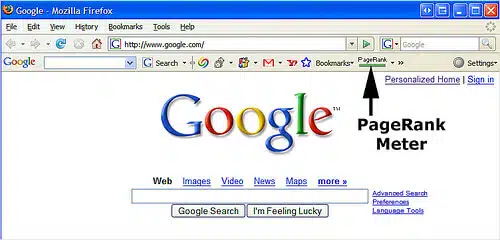
PageRank is one of the original ideas behind how Google ranked websites. It was created by Larry Page and Sergey Brin (the founders of Google) while they were at Stanford. The basic idea was that links could be used to measure the authority and trustworthiness of a website.
PageRank works by looking at both the quantity and quality of links pointing to a page. If many strong websites link to a page, that page is likely to be seen as more authoritative. However, quality matters more than quantity. A few valuable links can be better than a lot of weak ones.
PageRank is sometimes compared to academic citations. In research, if many scholars cite a paper, that paper is probably important. Google applied a similar idea to the web. If many trustworthy websites link to a page, that page may be important too.
Originally, PageRank was a major part of Google’s ranking system. Over time, Google has become much more complex. Today, ranking depends on things like content quality, user experience, mobile performance, search intent, and technical SEO. Still, PageRank helped form the foundation for how Google thinks about authority.
PageRank showed that links should not be ignored. They are not the only part of SEO, but they are still a major trust signal. A website with useful content and strong links is more likely to perform well than a website with good content but no outside recognition.
PageRank shows why link building is not just a random marketing tactic. It is connected to the way SEs understand importance, authority, and credibility across the internet.
No Responses