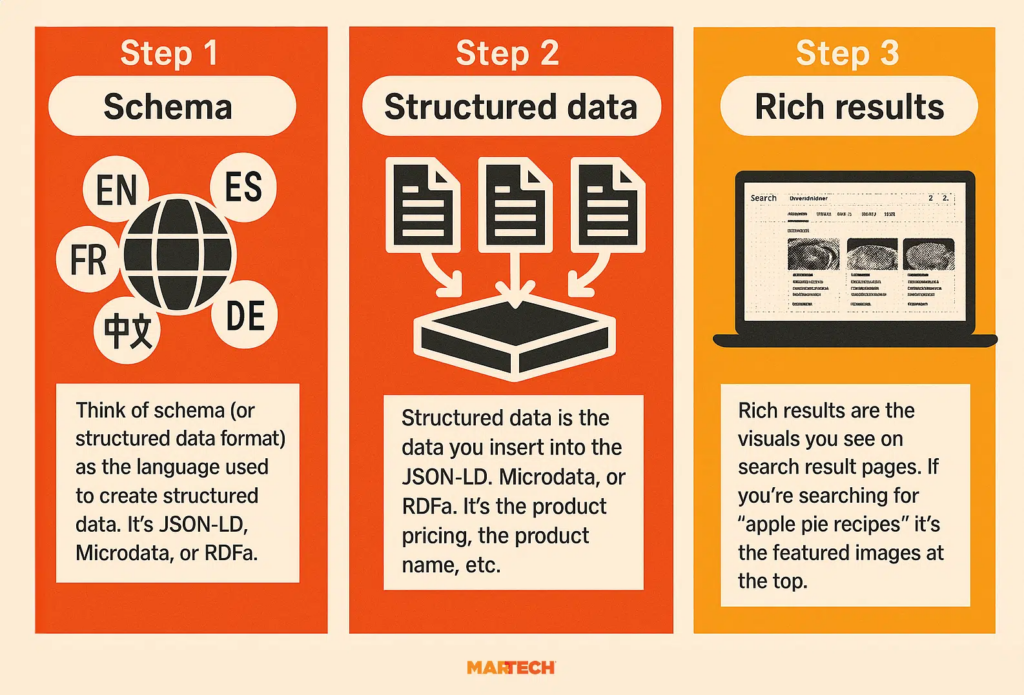
Structured data is information on a website that is organized in a clear format so SEs can understand it more easily. While normal website content is written for people, structured data helps explain that content to SEs in a more direct way.
For example, a webpage might list a business name, hours, services, reviews, prices, or events. A person can usually understand that information by reading the page, but a search engine may need extra information. Structured data gives Google a better explanation of what each piece of information means.
One major benefit of structured data is that it can help a website appear with rich results in search. Rich results are enhanced search listings that may include extra details like star ratings, prices, event dates, FAQs, product availability, or other helpful information. These results can stand out more than a regular search listing and may encourage more people to click.
Structured data can also improve CTR because users can see useful information before they even visit the site. For example, if someone searches for a local service and sees business details, service information, or reviews directly in the search result, they may be more likely to choose that website.
Another important part of structured data is that it makes website information easier for SEs to classify. Instead of Google guessing whether a page is about a product, service, recipe, event, or business, structured data helps define the page more clearly.
Structured data does not guarantee higher rankings by itself, but it can support SEO by making content easier to understand and more attractive in search results. It is especially helpful for businesses, blogs, product pages, event pages, and FAQ pages.
Overall, structured data is valuable because it organizes website information in a way that benefits both search engines and users. It helps search engines better understand a page and can make search results more useful, detailed, and clickable.
No Responses